
- Docente: Sandro Azaele
- Docente: Amos Maritan
- Docente: Samir Simon Suweis
Scuolagalileiana
Salta corsi disponibili
Corsi disponibili
- Docente: Stefano Corni
- Docente: Barbara Fresch
- Docente: Antonino Polimeno
- Docente: Sergio Rampino
- Docente: Luca Beltramini
- Docente: Francesco Lubian
Corso di alta formazione in "Frontiere della fisica fondamentale"
Direttore: Gianguido Dall’Agata
Obiettivi formativi
Il corso Frontiere della Fisica Fondamentale (F3) è rivolto agli insegnanti di Fisica nelle scuole secondarie di secondo grado e vuole offrire un aggiornamento professionale e culturale, illustrando in un percorso strutturato le scoperte ed i problemi aperti nella fisica fondamentale, utilizzando i premi Nobel assegnati negli ultimi 20 anni come fil rouge. L'esigenza formativa nasce dall'entrata della fisica moderna nel programma dei corsi di Fisica e l'obiettivo è di offrire non solo un aggiornamento sugli aspetti di fisica fondamentale alla frontiera della ricerca attuale, ma anche strumenti per introdurre in maniera competente questi aspetti all'interno delle lezioni svolte nelle scuole secondarie di secondo grado e permettere un migliore orientamento degli studenti nella transizione verso l'Università.
Descrizione attività didattiche
A – Le frontiere della fisica delle particelle elementari
B – Le frontiere della gravità
Ore totali: 75 (18 ore di lezioni, laboratori / 57 ore di studio individuale)
Calendario:
6 incontri da 3 ore di lezione frontale, con cadenza settimanale o bisettimanale, a partire dal 18 ottobre 2024
Sono previsti i seguenti insegnamenti:
- Antonio Masiero, Il modello Standard delle particelle elementari
- Sabino Matarrese, Il modello Standard cosmologico
- Ferruccio Feruglio, I neutrini
- Elisa Bernardini, I neutrini - IceCube
- Francesco D'Eramo, La materia oscura
- Davide Cassani, I buchi neri
- Gianguido Dall'Agata, Le frontiere della gravità
- Giacomo Ciani, Le onde gravitazionali
Prova finale: quiz
Inizio e durata attività didattiche
Inizio attività: 18/10/2024
Fine attività: 20/12/2024
Frequenza minima
70% delle ore di didattica frontale, erogate sotto forma di lezione.
Docenti
Il corso verrà tenuto da docenti universitari e da ricercatori esperti nelle tematiche trattate.
Sede
Università degli Studi di Padova
Scuola Galileiana di Studi Superiori
Aule didattiche
Via Venezia 20, 35131, Padova
- Docente: Elisa Bernardini
- Docente: Davide Cassani
- Docente: Giacomo Ciani
- Docente: Giacomo Ciani
- Docente: Francesco D'Eramo
- Docente: Gianguido Dall'Agata
- Docente: Sabino Matarrese
- Docente: Giovanna Carnovale
- Docente: Ernesto Carlo Mistretta
- Docente: Davide Vittone
- Docente: Lucio Bonato
- Docente: Diego De Stefani

- Docente: Marco Grassi
- Docente: Andrea Serafini
First part (Jeff Byers)
Basic principles of Bayesian statistics, information theory and Machine Learning (ML)
Applications to (Bayesian) Inference (including project work with real data)
Potential topics:
- Variational Bayes: modeling the posterior density with ML
- Feature learning in high-dimensional model outputs
- Simulation-based inference for stochastic models
- Docente: Carlo Albert
- Docente: Jefferson Mc Culloch Byers
- Docente: Davide Cassani
- Docente: Luca Vecchi
- Docente: Marco Zanetti
- Docente: Andrea Longhin
- Docente: Giampaolo Mistura
- Docente: Paolo Sartori
- Docente: Debora Provolo
- Docente: Francesco Lubian
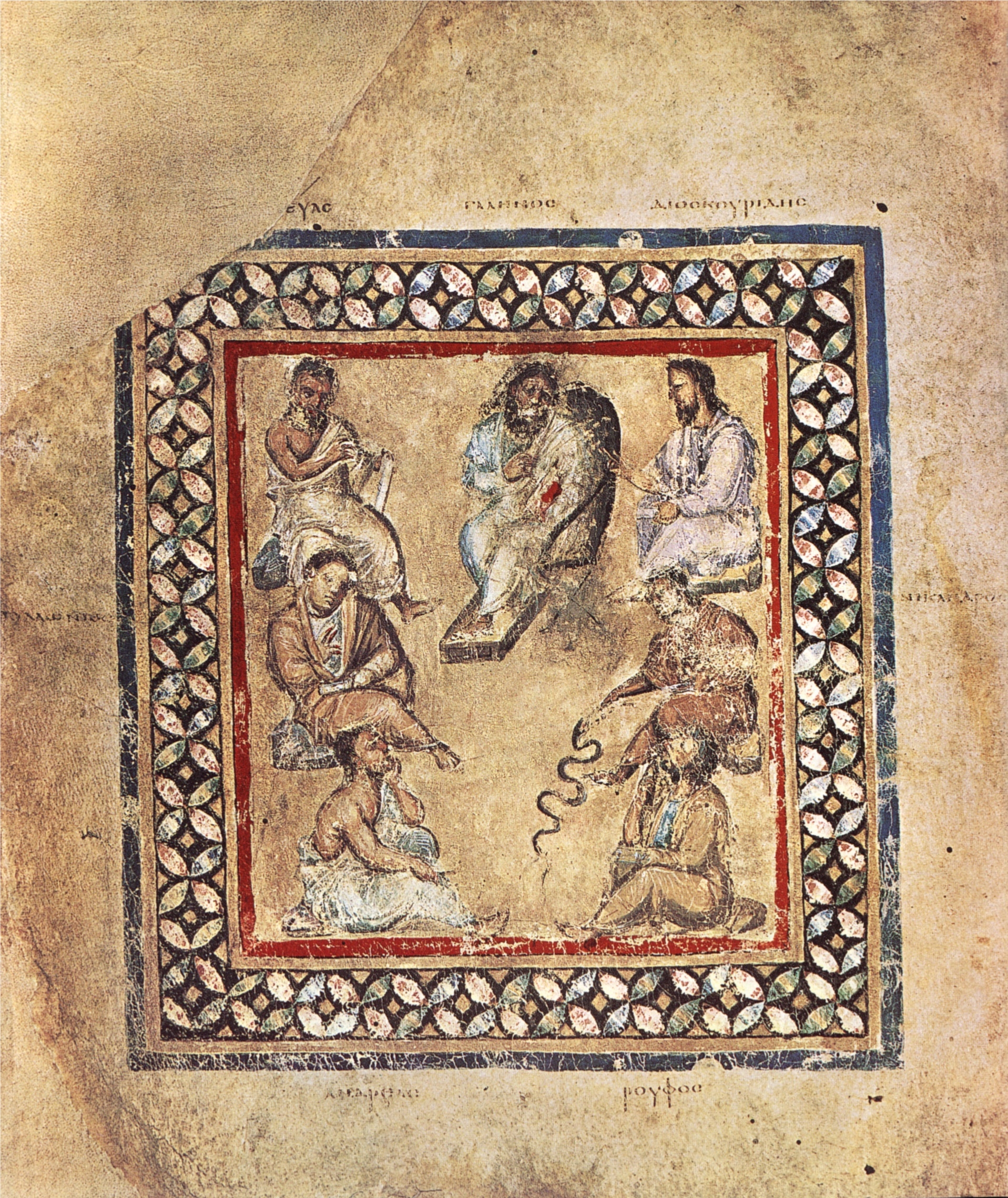
Il corso è vòlto all'indagine della figura di Galeno filologo: alla ricostruzione delle sue pratiche, dei suoi metodi, dei suoi strumenti di lavoro. Una silloge di testi, che saranno forniti in fotocopia, illustrerà gli aspetti molteplici della sua attività filologica: gli strumenti di lavoro (libri e biblioteche), la pratica della ricerca di copie e della collazione, l'indagine sulla genesi e sulle dinamiche degli errori – e dunque l'identificazione empirica delle relative "tipologie", l'adozione di segni diacritici; e, insieme, fenomeni di più ampio respiro, come la pratica delle doppie redazioni, fino a riflessioni acute e attente sulla conservazione e sulla perdita dei testi.
La silloge di testi permetterà di costruire una sorta di piccolo manuale di critica del testo nell'antichità, attraverso il caso di un solo – sensibile e dottissimo – studioso e filologo dell'antichità.
- Docente: Margherita Losacco
- Docente: Federico Bertoni
- Docente: Andrea Altobrando
- Docente: Emanuele Zinato
Lecturer: Dr Roberto Bonfatti, roberto.bonfatti@unipd.it
Subject: Economics (SECS-P/01)
Period: 1st semester, 15 hours
Language: English
Syllabus:
Summary: The course introduces students to the key facts about economics growth, and the main theories which have been developed to explain them. It takes a very long-run view of economic growth, spanning over the entire history of mankind but focusing on the last two centuries. It also discusses modern experiences, and the world’s growth perspective over the coming decades.
Contents:
· Introduction and stylised facts. We provide a short overview of the contents of the module, and the key questions that we are going to address. We explore a number of facts about economic growth around the world over the past 1000 years.
· The era of stagnation. We set up a theoretical model to help us understand the reasons why economic growth was almost non-existing until the 18th century. We then use the model to get some insights into the fluctuations in per capita GDP before the 18th century. We will explore the impact of the Black Death on European per capita GDP and population in the 14th-18th century, the impact of the introduction of the potato in Ireland in the 17th century, and the consequences of technological progress in China in the 16th-18th century.
· From stagnation to sustained economic growth. We modify the model introduced in the previous lectures to understand how a stagnating economy can transit to a condition of sustained economic growth. We use the model’s insights to explain the coming of the industrial revolution in Britain and a few other Western European countries in the late 18th century/early 19th century.
· The era of sustained economic growth. We introduce an entirely new model – the famous Solow model, the workhorse model of modern growth theory – which allows us to better understand the factors that underpin sustained economic growth: physical and human capital accumulation, and technological change. We use the model to generate insights on how fast countries at different level of development – that is, countries that have begun to experience sustained economic growth at different times – should be growing. We use the insights obtained from the Solow model to better understand the pattern of growth of various countries in the 19th and 20th century.
· From proximate to fundamental causes of growth: “Luck” and “Culture”. We take stock of what we have learnt so far, and acknowledge that countries can only experience sustained economic growth – and therefore become rich – if they are able to improve their technology, and to accumulate physical or human capital (the so-called “proximate” causes of growth). We then ask a key question: why were some countries able to improve their technology, and to accumulate physical or human capital, why others were not? There are four, partially competing answers to these questions (each emphasizing a different “fundamental” cause of growth), and we begin by reviewing the first two: “luck” and “culture”.
· “Geography”. We review a number of studies claiming that it is mainly for geographical reasons that some countries are less good than others at accumulating physical or human capital, and at inventing and adopting better technology. For example, some of these studies claim that certain types of climates are less favorable for the onset of these processes, while others suggest that some regions were advantaged by the fact that, because of the plant and animal environment that they faced, they discovered agriculture and herding much earlier than the others.
· “Institutions”. The final fundamental cause of growth is institutions. Supporters of this view hold that a pre-condition for people to be able to accumulate capital and improve technology is that there are 1) good political institutions: governments capable of delivering key services (e.g. security, infrastructure, health, education, etc) and responsive to a wide range of interests; and 2) good economic institutions: well-defined property rights, contestable markets, an efficient judiciary, etc. We study how the emergence of sustained economic growth in Western Europe may be explained with the emergence of good institutions in the centuries before and during the industrial revolution. We further continue deepening the broad concept of “institution”, listing what of the features of “good institution” actually helped to shape the divergence in growth.
· Fundamental causes: the debate. In this lecture we make a critical approach to the fundamental causes of growth we analyzed in weeks 7-10. In particular we list for each fundamental cause the most convincing elements and the limits of the views.
· Assessing current experiences. We use what we have learnt so far to think critically about some contemporary growth experiences.
References: There is no single textbook that adequately covers the entire material. For topics 1-4, the main reference material will be the lecture. For topics 5-9, the main reference will be the lecture notes and the following book: Acemoglu, Daron and James Robinson (2012). Why Nations Fail – The Origin of Power, Prosperity and Poverty, London, Profile Books Ltd. Throughout the course we are going to use various journal articles, downloadable for free from within the University network.
- Docente: Roberto Bonfatti
- Docente: Alberto Barausse
- Docente: Roberto Monti
- Docente: ALESSANDRO VICI
- Docente: Carlo Albert
- Docente: Jefferson Mc Culloch Byers

- Docente: Fabio Manenti
- Docente: Carlo Reggiani
Docente: Proff. Marco Rispoli e Elisabetta Mengaldo
Argomento del seminario
La stesura del Faust di Goethe si protrae lungo un periodo di quasi sessant’anni a cavallo tra il Settecento e l’Ottocento, al centro di una “Sattelzeit” (Koselleck), di una soglia che segna un profondo e talora traumatico rinnovamento culturale. L’opera rispecchia le circostanze che ne accompagnarono la genesi, divenendo luogo di confronto con i più diversi aspetti della modernità, dalla riorganizzazione dei saperi alla trasformazione delle convenzioni sentimentali. Il seminario si propone allora di introdurre alla lettura del Faust collocando alcuni dei momenti dell’opera in un simile contesto storico-culturale, in modo da cogliere alcune linee essenziali della critica che Goethe riservò alla propria epoca.
Struttura del seminario
Il corso si articola in cinque incontri, che si svolgeranno nel secondo semestre, nella primavera 2021. Gli incontri saranno dedicati a specifici temi e momenti del Faust:
- La tragedia del dotto. L’origine del mito faustiano e la sua trasformazione moderna.
- La tragedia di Gretchen. Il fallimento della sensibilità dell’uomo nuovo e il mito del “femminino”.
- Inserti lirici nel tessuto del dramma (incontro tenuto dalla professoressa Elisabetta Mengaldo)
- La critica dei saperi: Faust e il mondo moderno (incontro tenuto dalla professoressa Elisabetta Mengaldo)
- Il “faustismo” e la sua critica. Sulla ricezione della tragedia.
Bibliografia
Tra le diverse edizioni italiane si consigliano:
- Johann Wolfgang Goethe: Faust, traduzione di Franco Fortini, Milano, Mondadori, 2016.
- Johann Wolfgang Goethe: Faust – Urfaust, traduzione di Andrea Casalegno, Milano, Garzanti, 2008.
Singole letture di approfondimento critico verranno indicate in seguito. Tra i commenti in lingua tedesca si segnalano le edizioni di Albrecht Schöne (Goethe: Faust, 2 voll., Frankfurt am Main, Suhrkamp, 1994 e successive edizioni) e di Ulrich Gaier (Goethe: Faust-Dichtungen, 3 voll., Stuttgart, Reclam, 1999).
- Docente: Elisabetta Mengaldo
- Docente: Marco Rispoli
Teacher: Fulvio Baldovin – UniPd – fulvio.baldovin@unipd.it
Motivations. Thermodynamics is a basic interdisciplinary subject which bridges over different areas of science, including physics, mathematics, chemistry, engineering, biology, and medicine. Although common to many bachelor curricula, time constraints and needs of focusing on practical application in the specific field tend to hinder the presentation of the simple, symmetric structure which underlies Thermodynamics. As a consequence, students may turn out to be confused about the meaning and use of different thermodynamic potentials and response functions. Goal of the present course is to introduce the thermodynamics of simple systems. While keeping mathematical aspects at a level suitable for first-year undergraduate students, emphasis will be given to the equivalence of the entropy and energy representations, which through Legendre transformations generate all other potentials. Exemplifications and case of study from different fields will help the comprehension and application the formal structure.
Targeted audience. The course targets the Natural Science Class of the Galilean School of the University of Padova, including students in physics, mathematics, chemistry, engineering, biology, and medicine. The ideal audience has supposedly been exposed to an introductory course of mathematical analysis in one variable, while a practical knowledge of partial derivatives and Legendre transformations will be offered within the course's lectures.
• The temporal nature of macroscopic measurements
• The spatial nature of macroscopic measurements
• Summary of thermodynamic parameters
• The postulate of thermodynamic equilibrium
• Walls and constraints • Measurability of the energy
• Quantitative definition of heat
• The basic problem of equilibrium thermodynamics
• The entropy postulates • Partial derivatives and differentials
• Intensive parameters and equations of state
• Thermal, mechanical, and chemical equilibrium
• The Euler equation • The Gibbs-Duhem relation
• Fundamental relation and equations of state
• The simple ideal gas • The van der Waals ideal fluid
• The electromagnetic radiation
• The “rubber band”
• Second derivatives of the fundamental relation
• Possible, impossible, quasi-static, and reversible processes
• The maximum work theorem
• Engine, refrigerator, and heat pump performance
• The Carnot cycle
• Insight: thermal conductance and conductivity
• Power output and endoreversible engines
• The energy minimum principle
• Legendre transformations
• Thermodynamic potentials
• Massieu functions
• The minimum principles for the potentials
• The Helmholtz potential and the Laplace equation
• The Gibbs potential and chemical reactions
• Maxwell relations
• Reduction of derivatives
• Reconstruction of a fundamental equation from response functions
• Thermodynamic stability in the entropy representation
• Thermodynamic stability for the potentials
• Introduction to phase transitions
• The Clapeyron equation
• Unstable isotherms and first-order transitions
• General attributes of first-order phase transitions
• Thermodynamics in the neighborhood of the critical point
Teacher CV. Fulvio Baldovin is Assistant Professor in Physics at the Physics and Astronomy Department of the University of Padova. He is author of about 45 original research articles in international journals. He has been teaching Statistical Mechanics for the Ph.D. degree in Physics, and Biological Physics for the Bachelor degree in Molecular Biology. He has been tutor in Theoretical Physics for the Galilean School of the University of Padova. He actively collaborates with complex systems groups at the Weizmann Institute in Israel and at the Universidad Nacional Autonoma de Mexico (UNAM).
Textbooks/bibliography. H.B. Callen, Thermodynamics and an introduction to Thermostatistics – Second Edition, Wiley. A number of problems and examples will be explicitly solved at the blackboard.
- Docente: Fulvio Baldovin
Teacher: Daniela
Tonon– UniPd – daniela.tonon@math.unipd.it
Motivations :The course introduces tools of mathematical analysis for optimization and control. The goal is to be able to understand and solve simple problems of optimal control in Economics and Life sciences.
Targeted audience: Students in Economics and Life sciences.
Prerequisites: Basic notions of Mathematical Analysis
Syllabus: Optimization with constraints, Lagrange multipliers, Kuhn Tucker theorem, Ordinary differential equations, Calculus of Variations, Optimal Control, Pontryagin maximum principle, Dynamic Programming
Teacher CV:
2011 Ph.D. in Mathematical Analysis at SISSA Trieste, Italy.
2011-2012 Post-doc Fellowship on kinetic theory, ICERM, Brown University, Providence US.
2012-2013 Post-doc Fellowship on optimal control, SADCO Marie-Curie Action, Université Pierre et Marie Curie, Paris, France and Imperial College London, UK.
2013-2020 Maître de conférences Université Paris Dauphine, Paris, France.
Since December 2020 Associate Professor in Mathematical Analysis at University of Padova.
Research interests: Partial differential equations, Mean field games, Optimal control theory and Kinetic theory.
Textbooks/bibliography:
Weber, Optimal control theory with applications in Economics, the MIT press 2011
Seierstad Sydsaeter, Optimal control theory with economic applications, North Holland
Anita, Arnautu, Capasso, An Introduction to Optimal Control Problems in Life Sciences and Economics, Birkhauser
- Docente: Daniela Tonon
Teacher: Alessandro Angrilli - UniPD - alessandro.angrilli@unipd.it
Motivation
The course provides an overview of the mechanisms of drugs action, their psychotropic effects along with side effects, and in some interesting cases, their potential use for pharmacological treatment of neurological and psychiatric disorders. Targeted audience The course is especially directed to students in Medicine, Biology, Psychology, Chemistry, Neuroscience. However, students from other scientific disciplines may take advantage of the principles in drug action. Pre- requisite are basics on cell biology, chemistry, neuroscience and neurophysiology.
Syllabus
1) Principles of action of drugs, pharmacokinetic, pharmacodynamics and toxicity [4h]
2) Drugs that inhibit the central nervous system, benzodiazepines, GHB, abuse inhalants, and alcohol [7 h]
3) Psychostimulant drugs, cocaine, amphetamine, caffeine, and nicotine [7 h]
4) Oppioids, stupefying drugs (morphine, heroin, oxycodon, methadone, etc.) [4 h]
5) Psychedelic drugs, ketamine, LSD, psyclocibin, ecstasy, addiction and psychopharmacological use [4h]
6) Marijuana and cannabinoids, addiction and psychopharmacological use [4h]
Teacher CV
Master degree in Biology. PhD in Experimental Psychology with a thesis entitled "Psychophysiology of emotions". In 1995 spent one year in the Institute of Medical Psychology and Behavioral Neurobiology of Tübingen directed by Prof. Niels Birbaumer. In 1997-1998, Marie-Curie post-doc grant at the University of Konstanz, laboratories of Prof. Thomas Elbert with a project on cortical plasticity of language in aphasic patients after recovery. Since 2015, Full professor of Psychobiology, Department of General Psychology, University of Padova. In 2011-2013 he was coordinator of the PhD Course of Psychobiology. Since 2003, head of the Microgravity and Brain Plasticity Lab. Since 2013, head of the Psychophysiology Research Labs of his department including the Sleep Psychophysiology Lab. Department delegate for all the laboratories of his department. Associated Editor of the Journals: Biological Psychology, Scientific Reports, BMC Neuroscience.
Textbooks/ Bibliography
Robert M. Julien, Claire Advokat, Joseph E. Comaty. Droghe e farmaci psicoattivi. Bologna: Zanichelli,
2012. (the course will focus only on the chapters describing addiction drugs). The English original version
of the book has a more advanced edition, it is better to use the English 12th edition corresponding to the
Italian edition. Robert M. Julien, Claire Advokat, Joseph E. Comaty, 2010. A Primer on Drug Action, 12th
Edition
- Docente: Alessandro Angrilli
Lecturer: Andrea Spoto, University of Padova- email: andrea.spoto@unipd.it
Syllabus: The classification process is used by individuals as a method to simplify complexity and thus
facilitate the decision-making process. In the case of dichotomous decisions, the classification is
based on the grouping into two alternative and mutually exclusive categories of stimuli that rarely
have a dichotomous nature. Typically, there is a sort of continuity in the trait of “belonging” of each
stimulus to a category. This trait has at its lower pole the absolute non-belonging of the stimulus to
the category, while on the other pole there is the sure belonging of the stimulus to the category. An
extremely interesting aspect in this process is the fact that not all individuals carry out in the same
way the classification of stimuli in the two categories. This discrepancy could be due either to a
different evaluation of the stimuli, or to a distortion that occurs in the selection of the dichotomous
choice. In this respect it is crucial the level of belonging of the stimulus to the category which is
minimally sufficient for an individual to classify the stimulus in that category. The introduction of
this minimally sufficient level has great relevance in the study of decision-making processes and
has applications in various contexts including medical and psychological diagnosis, referee
decision, dispatch and emergency department triage, legal decision making, choices in economics.
The course aims to introduce the problem of estimating the “minimally sufficient level of
belonging” for the classification and the consequences of its use in decision making, in the
evaluation of the agreement among different individuals and in the description individual
classification attitude.
- Docente: Andrea Spoto
- Docente: Andrea Triossi
- Docente: Daniela Tonon

- Docente: Chiara Ponchia
- Docente: Gianluigi Baldo
L’obiettivo del corso è quello di esaminare come la guerra, gli eserciti e il modo di fare il soldato nell’età contemporanea possano essere analizzati attraverso le domande, gli strumenti e i metodi di indagine propri della storia culturale. Soprattutto negli ultimi trenta anni l’attenzione della storiografia sulla guerra si è spostata dalla dimensione strategico-militare e da quella politico-istituzionale alla analisi delle rappresentazioni, dei vissuti, degli immaginari. Questo tipo di indagine ha profondamente modificato interpretazioni e letture di alcuni eventi bellici chiave della contemporaneità (le guerre napoleoniche, la prima guerra mondiale), ha permesso di far emergere campi di indagine a lungo trascurati (ad es. la memoria della guerra), ha introdotto nello studio dei fenomeni militari nuove categorie analitiche (ad es. il genere).
Dopo una breve introduzione dedicata all’esame delle caratteristiche generali della storia culturale (4 h), saranno definite le coordinate generali dell’approccio culturale alla storia della guerra (2 h). Il corso affronterà poi 4 temi che sono stati al centro dell’attenzione della storiografia; ogni tema sarà introdotto da una lezione del docente e poi, attraverso relazioni e presentazioni in aula da parte degli studenti, saranno presi in esame saggi particolarmente significativi per comprendere come il tema sia stato analizzato dalla storiografia.
I temi che saranno esaminati sono i seguenti
- Il concetto di guerra totale. 4 h
- La prima guerra mondiale. 8 h
- Genere, mascolinità e guerra. 6 h
- La
memoria della guerra. 6 h
- Docente: Enrico Francia
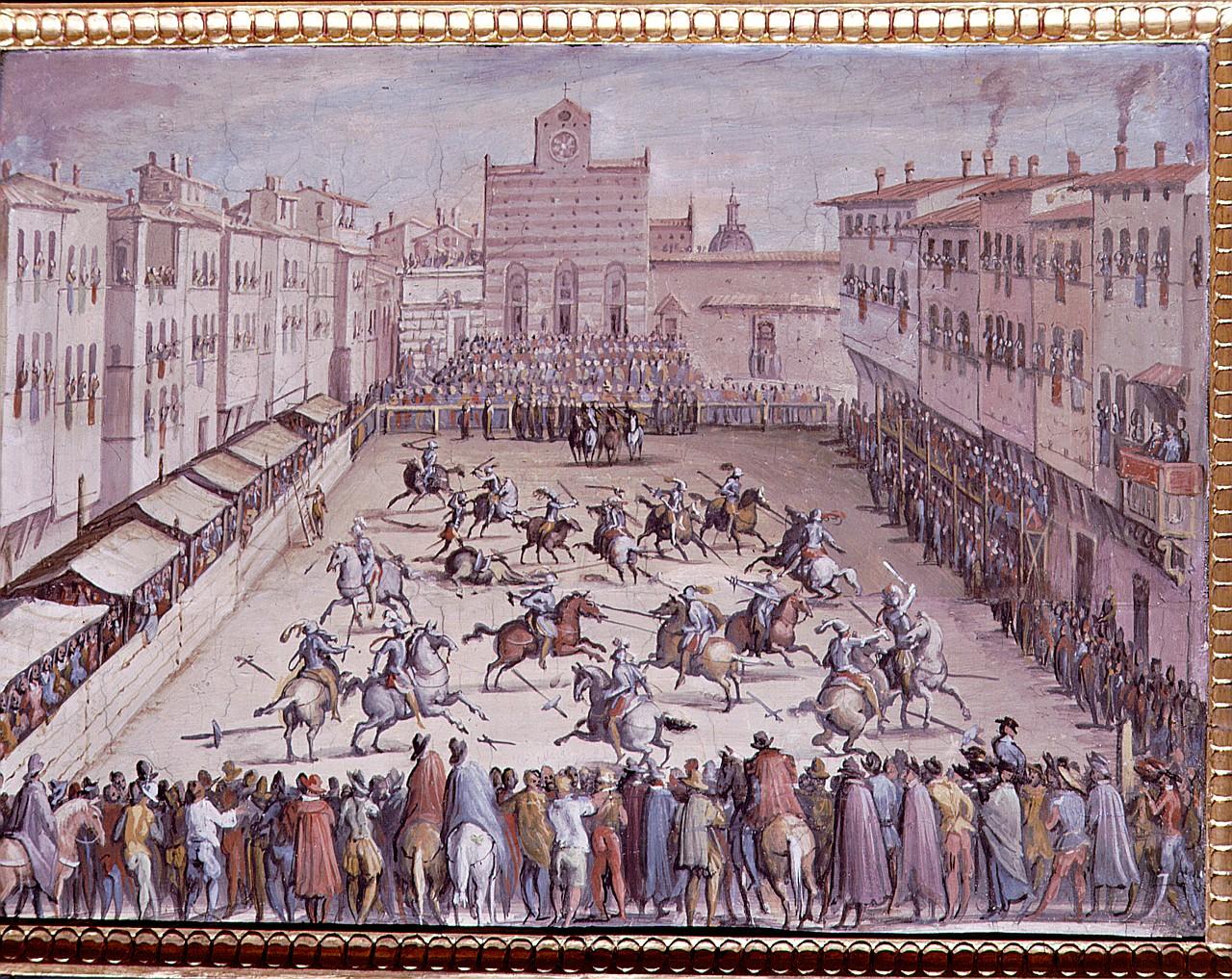
Il corso indaga la rappresentazione del potere in letteratura tra Cinque e Seicento, proponendo un itinerario comparato e transdisciplinare : comparato, perché l’analisi spazierà dalla Repubblica di Venezia alla Versailles del Re Sole, dalla Firenze medicea alle Province Unite; transdisciplinare, perché il corpus farà dialogare i testi poetici, da Ariosto a Marino, con i grandi cicli figurativi di Rubens e con i ritratti equestri di Velázquez, oltre che con la pratica performativa (intermezzi, spettacoli, feste). Dal punto di vista teorico, il problema della cultura encomiastica sarà affrontato con gli strumenti metodologici della tradizione novecentesca (Warburg, Benjamin, Foucault, Bourdieu, Jesi). Lo scopo è mettere in evidenza i punti di contatto, squisitamente politici, tra poesia, pittura e festa di corte, analizzando e comparando le forme assunte dal potere del principe, del re o del doge sulla pagina, sulla tela e sulla scena.
La prima parte del corso consterà di una serie di lezioni frontali. L'ultima parte del corso, invece, avrà taglio seminariale e includerà una serie di presentazioni da parte degli studenti, condotte a partire da un elaborato scritto che sarà consegnato preventivamente al docente. Questi lavori di approfondimento verteranno su un argomento a scelta dello studente, nella prospettiva di approfondire e sviluppare alcune delle tematiche discusse a lezione.
Per quanto riguarda la bibliografia, tutti gli studenti porteranno all'esame finale Alessandro Metlica, Lessico della propaganda barocca, Venezia, Marsilio, 2022. Il resto della bibliografia d'esame sarà concordato con il docente in base ai lavori di approfondimento: il docente provvederà a presentare e discutere in classe un'ampia serie di studi specialistici, così che ogni studente possa costruire la propria bibliografia di riferimento in funzione del proprio elaborato.
- Docente: Alessandro Metlica
Test
- Docente: Giambattista Giacomin
- Docente: Giovanna Carnovale
- Docente: Andrea Lucchini
- Docente: Roberto Monti
- Docente: Marco Zanetti
- Docente: Giampaolo Mistura
- Docente: Diego Frezzato
- Docente: Leonard Jan Prins
- Docente: Davide Cassani
- Docente: Gianguido Dall'Agata
- Docente: Christian Agrillo


- Docente: Enrico Rettore
- Docente: Andrea Ambrosi
- Docente: Gianmario Guidarelli
- Docente: Carlo Fumian
Il corso si svolge il mercoledì dalle 18.15 alle 18.30, a partire da mercoledì 11 marzo 2026.
Il corso si propone di approfondire lo statuto teorico e clinico della psicoanalisi, ricostruendone la genesi, i concetti fondamentali, la sua pretesa di scientificità e i problemi. L’attenzione sarà principalmente rivolta all’elaborazione teorica di S. Freud e di J. Lacan, nonché agli sviluppi più recenti.
Organizzazione del corso:
- introduzione: il problema dello statuto della psicoanalisi e l’interrogazione filosofica
- il contesto teorico entro il quale nasce la psicoanalisi: lo studio teorico della psiche e la clinica del disagio mentale nel XIX secolo (cenni)
- i concetti fondamentali della psicoanalisi in S. Freud: pulsione, inconscio, rimozione, ripetizione
- gli sviluppi della psicoanalisi dopo Freud e le innovazioni teoriche di J. Lacan: i registri immaginario-simbolico-reale, il significante, desiderio e godimento
- il problema dello statuto epistemico della psicoanalisi e la sua posizione entro il campo dei saperi sulla psiche
- i rapporti fra psicoanalisi e altre scienze (biologia, antropologia, sociologia).
Le ultime lezioni avranno carattere seminariale e saranno dedicate all’esposizione e discussione di relazioni da parte degli studenti su saggi di ambito psicoanalitico. La bibliografia relativa verrà fornita all’inizio del corso.
Principali riferimenti bibliografici:
1) S. Freud, Opere, Boringhieri, Torino 1977 sgg.:
- Introduzione alla psicoanalisi. Lezione 1, vol. VIII, pp. 199-207
- Introduzione alla psicoanalisi, nuova serie, lezione 35, vol. XI, pp. 262-284
- Breve compendio di psicoanalisi, vol. XI, pp. 571-605
- Metapsicologia, vol. VIII, pp. 1-88
- L’interesse per la psicoanalisi, vol. VII, pp. 249-272
2) J. Lacan:
- Il seminario libro II. L’io nella teoria di Freud e nella tecnica della psicanalisi 1954-1955, Einaudi, Torino 2006
- Funzione e campo della parola e del linguaggio in psicoanalisi, in Scritti, ed. it. Einaudi, Torino 1977
- L’istanza della lettera dell’inconscio o la ragione dopo Freud, ivi
- La scienza e la verità, ivi
Ulteriore bibliografia di approfondimento verrà fornita durante il corso, anche sulla piattaforma moodle.
- Docente: Pierpaolo Cesaroni
- Docente: Emanuele Zinato
- Docente: Alessandra Pattanaro
- Docente: Luciano Bossina
- Docente: Leonardo Congiu
- Docente: Graziano Martello

- Docente: Agostino Migliore
- Docente: Mirco Zerbetto
- Docente: Enzo Orlandini
- Docente: Giampaolo Mistura
- Docente: Elio Marconi
- Docente: Francesco Silvestri
Overview
The human brain is by far the most complex structure in nature. Its fundamental functional unit is the neuron, an electrically excitable cell that processes and transmits information to other neurons through electrochemical signaling. Unlike many other cell types, most neurons do not divide and persist throughout an individual’s lifetime; therefore, neuronal loss directly corresponds to loss of information.
Although neuronal degeneration is an inevitable process that ultimately occurs in the aging brain, it can be accelerated by environmental factors, genetic causes, or a combination of both. It is estimated that by 2030 approximately 25% of the European population will be over 65 years of age, highlighting how age-related disorders represent a major medical and social challenge.
Research in this field is rapidly expanding, and the identification of novel molecular targets and disease biomarkers is opening exciting opportunities for therapeutic intervention.
Targeted audience
The course is intended for students enrolled in biological and medical degree programs. Although prior knowledge of neuronal physiology is beneficial, essential concepts of neurobiology will be introduced during the course to provide a solid foundation for critically discussing the mechanisms of neuronal degeneration in Parkinson’s disease, Alzheimer’s disease, and other neurodegenerative disorders, with particular emphasis on recent advances in the field.
Syllabus
Cellular components of the nervous system; neurotransmitters and receptors; synapse biology; molecular mechanisms of neurodegeneration; cellular and animal models to study neurodegenerative disorders; biomarkers and therapies.
- Docente: Elisa Greggio